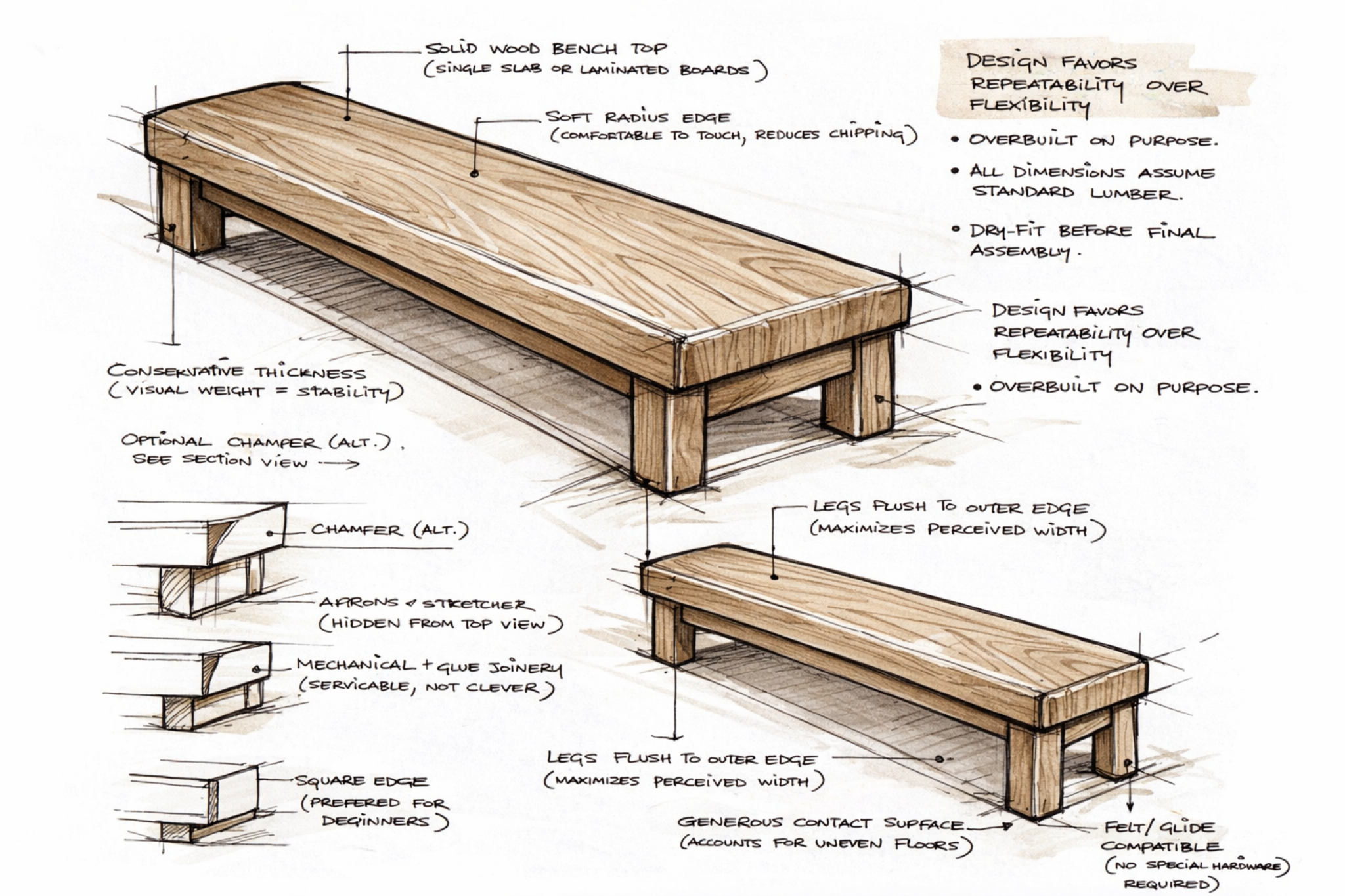
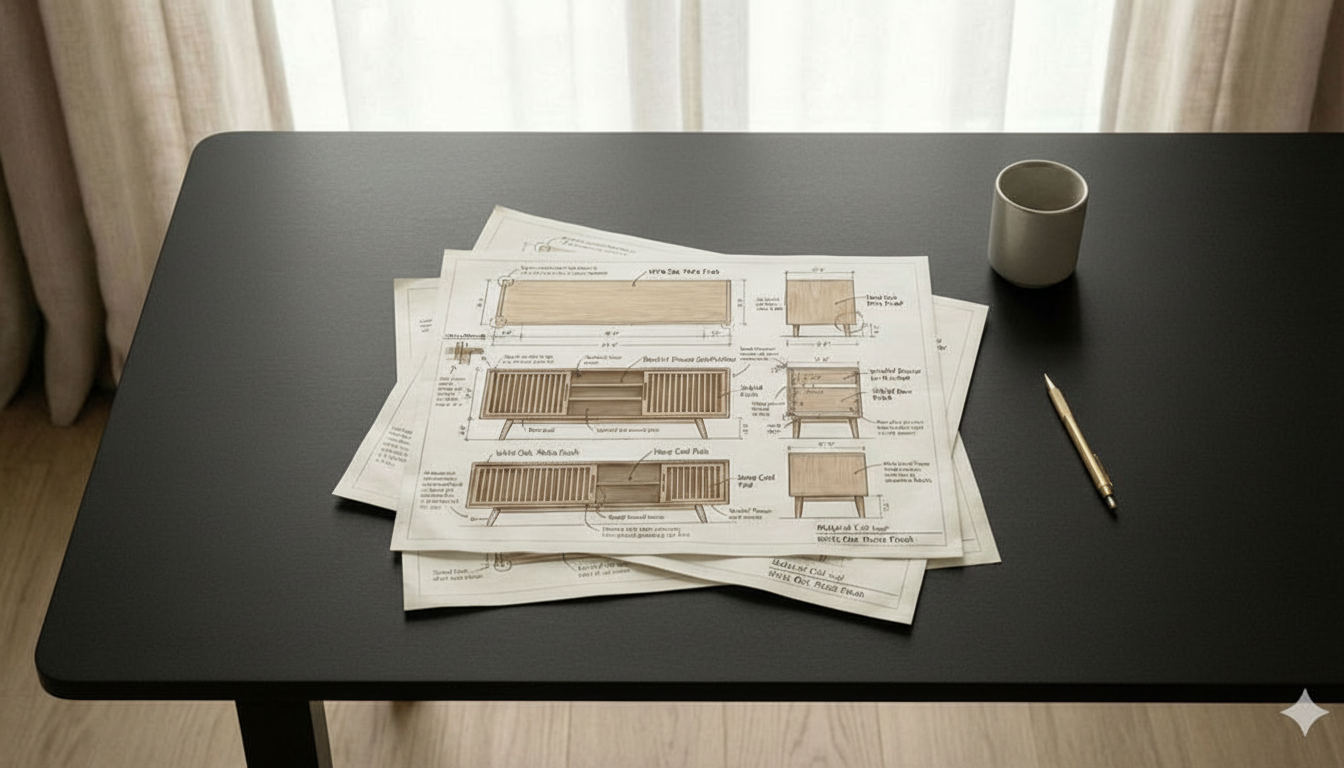
Building furniture shouldn't feel like guessing.
Most beginner plans don't fail because the builder lacks skill.
When a plan doesn't feel trustworthy, it's hard to start.

We created a 60-second check to help you see the difference before you buy wood, tools, or start cutting.
What you'll get in 60 seconds

A clear buildability result
Where uncertainty is likely to show up
Whether this plan is safe to start, or needs rethinking
A calmer way to decide what to build next
Not all steps carry the same risk.
Most furniture plans list steps, but they don't explain priorities. They rarely tell you:
- Which steps need precision
- Which ones are forgiving
- Which mistakes are recoverable
When everything feels equally important, it's hard to move forward — even when you want to.
You don't need better tools.
Most beginners get stuck because they don't know where accuracy matters.
Tools rarely fix uncertainty.
Clear priorities do.
What you'll get in 60 seconds
A clear buildability result
Where uncertainty is likely to show up
Whether this plan is safe to start, or needs rethinking
A calmer way to decide what to build next
How it works
Answer a few honest questions about your plan
Spend 60 seconds on questions about dimensions, joinery, materials, and tools. No experience needed.
We check for common decision gaps
Your answers are evaluated against patterns that cause beginner builds to stall — missing details, unclear steps, tool assumptions.
Get a personalized readiness report
Receive a buildability score with specific gaps to close and a prioritized list of what to decide next — sent to your email.
What the check looks for
Most furniture projects that stall don't fail because of skill. They fail because key decisions weren't made before the first cut. The buildability check evaluates your plan for these common gaps:
Unlocked dimensions
Final measurements aren't confirmed, leaving room for compounding errors.
Unspecified joinery
The plan doesn't state how pieces connect — butt joints, pocket holes, dowels, or something else.
Undefined material thickness
Lumber dimensions aren't called out, so you can't create an accurate cut list.
Missing tool requirements
The plan assumes tools you may not own, with no alternatives suggested.
Unknown failure points
No indication of which steps need precision and which are forgiving.
Frequently asked questions
We're building Hemma.
Guided furniture build experience from inspiration to execution
Hemma is being shaped around a simple idea: inspiration is only useful if it can be carried through to a finished build.
Through steady guidance and clear decisions, it helps turn initial ideas into designs meant to be built, not just admired, so you can move forward with confidence from the beginning.